


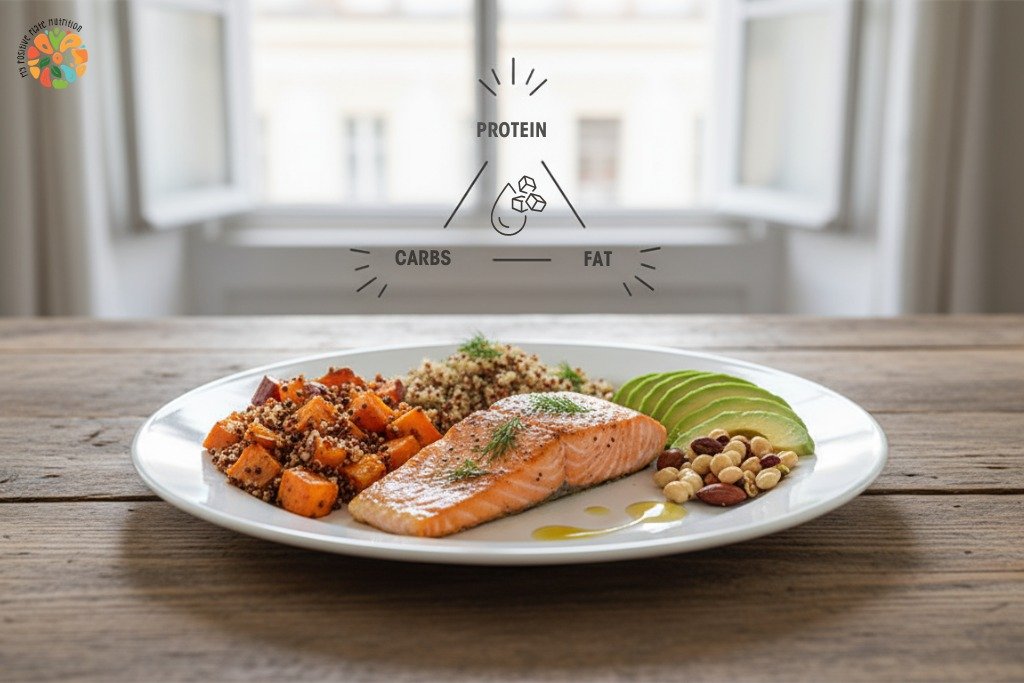
Learn why pairing carbs with protein or fat helps prevent sugar crashes, supports steady energy, and keeps you full longer, without cutting carbs.
Ever wonder why dietitians often say: “Don’t eat carbs alone”?
Carbohydrates are your body’s main source of energy, found in foods like fruit, bread, rice, grains, and even vegetables. But how you eat them makes a big difference.
What happens when you eat carbs alone
When you grab something like fruit juice or white bread your blood sugar rises quickly. That spike triggers insulin—the hormone that moves sugar out of your blood and into your cells. But when the spike is sharp, your body may release more insulin than needed. The result? A quick drop in blood sugar, or what we call a “crash.” That crash leaves you tired, hungry, and craving more sugar or carbs.
How pairing makes carbs work better
When you combine carbs with protein, fat, or fiber, digestion slows down. This helps your blood sugar rise more gradually, keeping your energy steady and reducing those sudden cravings. Pairing also helps you feel fuller for longer and adds more nutrients to your meal.
Even whole foods like fruit digest fairly quickly. Adding protein or fat makes the meal more balanced, helping you avoid energy swings.
Think of it like this:
- Carbs = quick energy
- Protein + fat = anchors that make that energy last longer
Simple pairings to try:
- Apple + peanut butter
- Fruit + Greek yogurt
But what about extra calories?
It might seem like adding protein or fat means adding more calories—but these calories actually work for you. Balanced meals help prevent overeating, reduce cravings, and may even save you from eating more later on.
The takeaway
Pairing carbs with protein or fat isn’t about restriction—it’s about balance. If you’re working on insulin resistance, metabolic health, or simply want steadier energy, this simple shift can make a big difference.
So next time you reach for a carb, ask yourself: What can I pair this with?